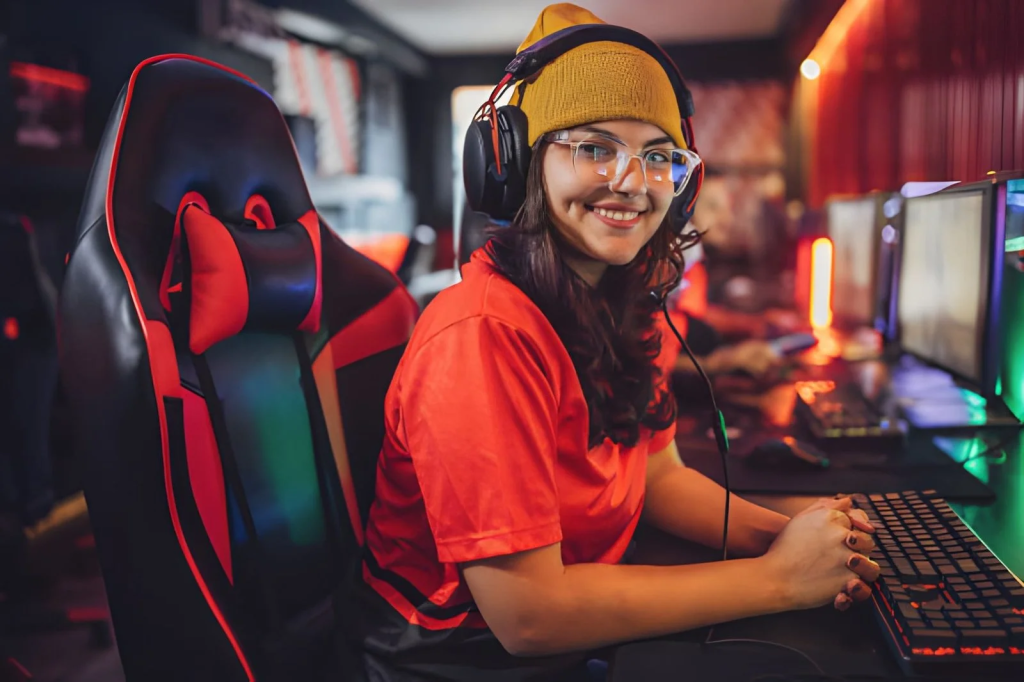
The global gaming chair market has traveled a long distance from its origins as a niche peripheral for hardcore gamers in dedicated gaming rooms. Today, gaming chairs are purchased not only by competitive esports players and streamers building professional setups, but by office workers, remote employees, students, and anyone spending extended hours in front of a screen who has discovered that a chair designed around ergonomic support and adjustability makes a genuine physical difference in comfort and long-term health outcomes. The market has grown into a serious global industry, and like every global industry, it is only as good as the supply chain behind it.
For manufacturers at the top of the gaming chair market, the decision to invest in strengthening their global supply chain is not primarily a cost-cutting exercise. It is a recognition that the quality, consistency, and reliability of the product delivered to the end consumer depends on the quality, consistency, and reliability of every component and every process that contributes to its production.
Why Ergonomic Seating Supply Chains Are Complex
Gaming and ergonomic chairs that genuinely deliver on their promise contain dozens of components that each require their own quality standards and production consistency. The foam cushioning in a premium ergonomic chair is not generic foam. It is a specific density and composition engineered to support body weight over eight or more hours of sitting without losing its support characteristics after months of daily use. The recline mechanism has to function reliably across years of daily adjustment. The armrest adjustment hardware has to hold its position precisely without loosening over time. The upholstery, whether leather, PU, or fabric, has to resist the abrasion, moisture, and UV exposure it will experience across a multi-year product life.
Each of these components comes from specialized suppliers, often in different countries, and coordinating their quality, delivery timing, and continuous improvement across a global manufacturing operation is exactly the kind of operational challenge that separates the best manufacturers from the average ones.
The Supply Chain Investment Case
For ergonomic chair manufacturers competing for position in the premium and upper-mid segments of the market, supply chain quality is not separable from brand quality. A chair that begins to fail within its warranty period, regardless of how good it looked and felt at purchase, creates a warranty claim, a customer service burden, and a product review that influences the purchase decisions of future buyers.
Conversely, a manufacturing operation that has deep, collaborative relationships with specialized component suppliers is able to consistently produce at a level that justifies premium positioning. Building partnerships with suppliers that can scale, maintain consistency, and invest in quality improvement alongside the finished goods manufacturer is a multi-year project that requires sustained commercial commitment from both sides. The payoff is a supply chain that is genuinely aligned on quality outcomes rather than just on price and delivery metrics.
The Global Distribution Opportunity
The geographic expansion of the ergonomic and gaming seating market creates supply chain demands that pure domestic manufacturing or single-region procurement strategies cannot efficiently serve. Different markets have different regulatory requirements: product safety standards in the EU, BIFMA certification standards in North America, and specific fire-resistance requirements in various jurisdictions that affect both component specifications and finished goods testing and certification.
Serving those markets from a single global manufacturing base requires supply chain architecture that can accommodate those variations while maintaining manufacturing efficiency. It also requires distribution infrastructure, whether owned or third-party, that can reach retailers, commercial buyers, and direct-to-consumer customers across multiple continents with the delivery reliability that modern B2B and B2C customers expect.
The announcement of supply chain strengthening by a leading gaming chair supplier signals an anticipation of continued market growth and a commitment to serving that growth from a position of operational strength. For buyers and distribution partners in key global markets, the investment is essentially a quality and reliability commitment.
References:
- Statista, Global Gaming Chair Market Size and Growth Projections, 2026
- Grand View Research, Ergonomic Seating Market Report 2026
- BIFMA, Ergonomic Office Chair Standards Overview
- Bloomberg, Global Furniture Supply Chain Trends 2026
- IBISWorld, Global Office Furniture Manufacturing Industry Report 2026