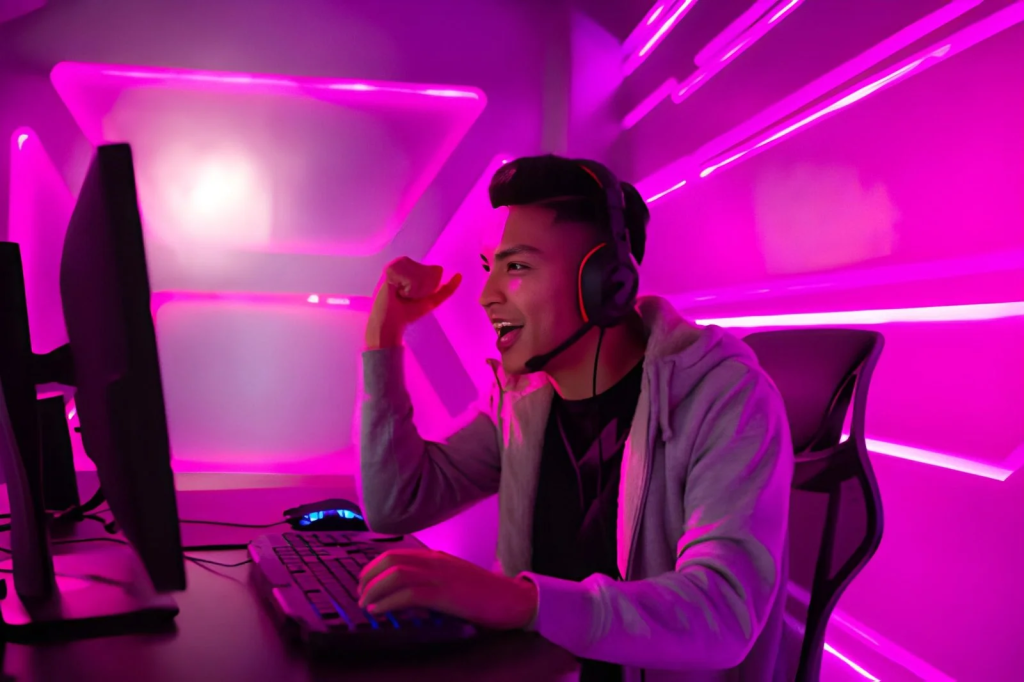
Few parenting conversations generate more anxiety than the question of how much time adolescents spend playing video games. The concern is understandable: gaming is immersive, it competes with sleep and homework and physical activity, and media coverage of gaming tends to focus on cases where it appears to have contributed to social withdrawal, academic decline, or behavioral problems. The picture that emerges from this coverage is alarming in a way that does not necessarily reflect what the research actually shows.
A substantial and growing body of scientific research, including studies from universities across Europe and North America, suggests that for the large majority of adolescents, even those who play games extensively, gaming does not produce negative effects on wellbeing, mental health, or academic performance. The relationship between gaming and adolescent health is considerably more nuanced than the public conversation typically acknowledges.
What the Research Actually Shows
One of the most significant contributions to this topic came from a research program at Oxford Internet Institute that tracked adolescent gamers over time using objective measures of gaming time, sourced directly from game platform data rather than relying on self-reported hours, which tend to be inaccurate. The study found that the relationship between gaming time and wellbeing was not the straightforward negative correlation that is commonly assumed. For the majority of adolescent gamers, including those playing substantial hours, wellbeing outcomes were not meaningfully different from those of non-gamers or light gamers.
The research did identify a smaller subgroup of adolescents, roughly 5 to 10% depending on the study, for whom gaming appeared to be associated with negative outcomes. But critically, the research suggested that for many of these individuals, the negative outcomes often preceded and potentially drove the heavy gaming rather than resulting from it. Adolescents who are already experiencing depression, anxiety, social difficulties, or family stress may turn to gaming as an escape, making heavy gaming a symptom of underlying difficulties rather than their cause.
This distinction matters enormously for how parents, educators, and clinicians should interpret a teenager’s gaming habits. A teenager who games extensively but maintains friendships, performs adequately in school, gets reasonable sleep, and engages with family presents a very different picture from one who games extensively as part of a broader withdrawal from social engagement and daily functioning.
What Healthy Gaming Looks Like
Research on adolescent gaming and wellbeing consistently identifies a set of factors that differentiate gaming that is associated with positive or neutral outcomes from gaming that is associated with negative ones.
Social gaming, whether playing cooperatively with friends online, participating in gaming communities, or using games as a shared activity with family members, is consistently associated with better outcomes than solitary gaming. Many of the most popular games among adolescents are inherently social: team-based competitive games, cooperative narrative games, and open-world games that people explore with friends. For adolescents who find social interaction easier in the context of a shared activity than in unstructured social settings, gaming can be a genuinely valuable social environment.
Motivation matters as well. Adolescents who play games because they find them genuinely enjoyable and engaging tend to have better outcomes than those who play to escape negative emotions or to avoid anxiety-provoking situations in their offline lives. The distinction between gaming as a positive source of entertainment and engagement versus gaming as avoidance behavior is not always visible from the outside, which is why conversations about gaming habits are more productive than screen-time rules applied without context.
Sleep is the most consistently identified mediating variable. Gaming that consistently displaces sleep, particularly due to late-night sessions that shift a teenager’s sleep schedule, is the pathway through which gaming most reliably produces negative outcomes. Teenage sleep requirements of eight to ten hours per night are well-established, and sleep deprivation has documented negative effects on mood, academic performance, physical health, and emotional regulation that are independent of gaming. Families that address the sleep dimension of gaming habits, rather than gaming time in isolation, tend to have more constructive conversations and better outcomes.
What This Means for Parents and Educators
The research on adolescent gaming should shift the conversation from hours to patterns. The question is not primarily how many hours a teenager is gaming, though extreme outliers do warrant attention, but rather what role gaming plays in their broader daily life. Is it one enjoyable activity among several, or is it crowding out sleep, physical activity, face-to-face social connection, and academic engagement?
The evidence also suggests that parental engagement with gaming, showing interest in what a teenager is playing and why, occasionally playing together, discussing the games’ themes and communities, is more productive than prohibition or strict time limits that are enforced without explanation. Adolescents whose parents engage with their gaming interests with curiosity rather than alarm tend to be more open about their gaming habits and more willing to set their own reasonable limits.
For educators and school counselors, the research cautions against treating extensive gaming as automatically indicative of a problem. The adolescent who games four hours a day but is socially connected, academically engaged, and emotionally stable is not presenting a clinical concern. The one whose gaming coincides with social withdrawal, declining grades, and disrupted sleep may be, and the appropriate response is to understand what needs the gaming is meeting rather than to focus intervention solely on the gaming itself.
For image use: Search Unsplash.com for “teenager gaming happy” or Pexels.com for “young person video games” for copyright-free images.
References:
- Technology.org, Many Adolescents Game a Lot Without Negative Effects, November 2022
- OxfordInternet.org, Gaming and Adolescent Wellbeing Research Program
- JAMA Pediatrics, Screen Time and Adolescent Mental Health Meta-Analysis 2024
- American Psychological Association, Video Games and Youth Mental Health Overview 2025
- SleepFoundation.org, Teen Sleep Requirements and Screen Time