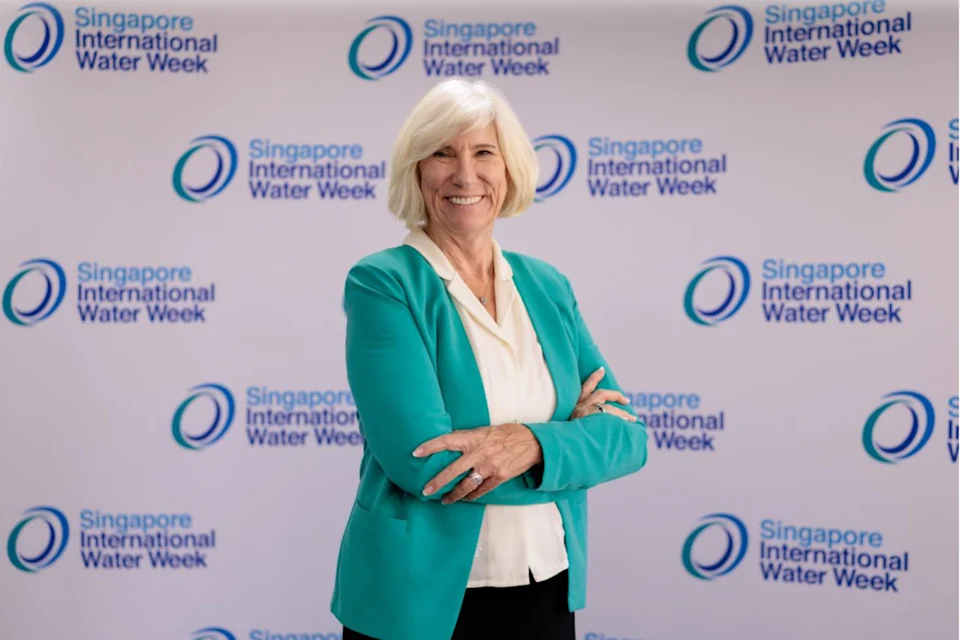
A decades-long commitment to making the world’s water safer to drink has earned Professor Joan Bray Rose one of the most respected awards in the global water sector. The American microbiologist was named the 2026 laureate of the Lee Kuan Yew Water Prize, a recognition of her foundational role in developing a scientific framework that now shapes drinking water policy across the globe.
Rose serves as the Homer Nowlin Chair in Water Research and Director of the Water Alliance at Michigan State University. Media Outreach Her career has been defined by a singular mission: giving water managers, governments, and public health authorities a reliable, science-backed method to assess the microbial risks hiding in water supplies.
A Framework That Changed the Rules
At the heart of Rose’s contribution is Quantitative Microbial Risk Assessment, widely known as QMRA. This science-based approach was developed to safeguard the quality of drinking water and water reuse systems, and Rose was a key pioneer in both its creation and its global adoption. Thailand Business News Before QMRA became mainstream, water safety decisions were often made on incomplete or inconsistent scientific grounds. Rose’s work gave the field a common language and a rigorous methodology.
Today, QMRA is not just an academic concept — it has been adopted into global drinking water standards and enabled safe water reuse, benefiting millions of people worldwide. Media Outreach
Impact Close to Home — and Far Away
One of the more tangible demonstrations of Rose’s influence can be found in Singapore itself. Her expertise in water quality and health played a key role in strengthening Singapore’s used water management and in the development of NEWater, the country’s third national tap. Thailand Business News NEWater — treated reclaimed water that meets drinking water standards — is now a cornerstone of Singapore’s water resilience strategy, and Rose’s scientific guidance helped validate its safety at a critical stage.
Beyond Singapore, her work has informed water reuse policies and microbial risk guidelines in countries across Asia, Europe, and the Americas. Her research has helped regulators make evidence-based decisions about everything from recreational water quality to the safety of irrigation water used on food crops.
About the Prize
The Lee Kuan Yew Water Prize was launched in 2008 to honor outstanding contributions by individuals or organizations toward solving the world’s water problems — whether through innovative technologies, or through the development of policies and programs that benefit humanity. Media Outreach Named after Singapore’s founding Prime Minister, the award carries significant prestige in the global water community.
The laureate receives a certificate, a gold medallion, and S$300,000, presented in partnership with Temasek Foundation at the award ceremony held during the Singapore International Water Week (SIWW). Media Outreach
The biennial SIWW is one of the premier global platforms for water thought leaders, gathering experts and practitioners from governments, cities, utilities, and industry to exchange knowledge and build partnerships around innovative water, coastal, and flood solutions. The Manila Times
A Career Built on Purpose
What sets Rose apart from many researchers is the real-world reach of her science. Risk assessment tools she helped develop are now embedded in international health guidelines, shaping how billions of people access safe water every day — often without knowing it. Her recognition with the 2026 Lee Kuan Yew Water Prize is a testament not just to the quality of her research, but to its enduring, practical value in a world where clean water remains one of the most pressing challenges of our time.