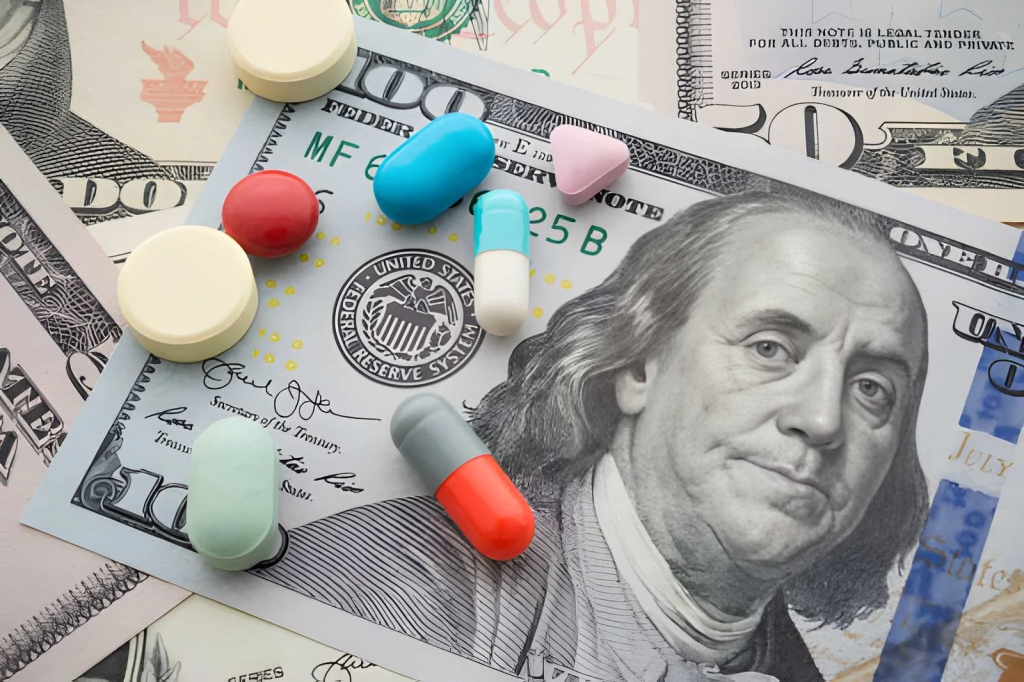
Some crises arrive without warning. The pharmaceutical industry’s patent cliff is not one of them. The expiration dates on blockbuster drugs are filed publicly with the USPTO. The revenue exposure has been calculable for years. The window between now and 2030, during which more than $300 billion in branded prescription drug revenue will lose exclusivity and face generic and biosimilar competition, has been visible on every major pharma company’s strategic planning horizon for a very long time.
And yet, despite that visibility, the industry finds itself in a position that is more precarious than it might appear from the outside. Because knowing a problem is coming and having a strategy adequate to address it are two different things and the decisions that will determine which companies emerge stronger from this period are being made right now, largely in the domain of workforce and organizational capability.
The Scale of What Is Coming
To appreciate the stakes, consider the numbers in context. The previous major patent cliff, around 2016, cost the pharmaceutical industry roughly $100 billion in branded revenue as major drugs lost exclusivity. The current wave, running from roughly 2025 through 2030, is three times larger. Some estimates suggest that up to one-sixth of the entire industry’s annual revenue is at risk during this period.
Specific companies face disproportionate exposure. Bristol Myers Squibb is arguably the most vulnerable among major players, with both Eliquis — one of the world’s most widely prescribed blood thinners and Opdivo, a flagship cancer immunotherapy, facing biosimilar competition. Combined, these two drugs represent tens of billions in annual revenue, and the growth gap between what goes off patent and what is in BMS’s pipeline to replace it is among the largest in the sector.
Merck’s situation is equally challenging. Keytruda, the world’s best-selling drug and the engine behind more than half the company’s revenue, is expected to peak around $32 billion in 2026 before facing biosimilar competition as its patents expire. For a company so heavily dependent on a single product, managing that transition successfully is an existential strategic challenge.
Pfizer, AbbVie, and others are navigating their own combinations of near-term patent losses and longer-term pipeline uncertainty, all while trying to demonstrate to investors that they have credible paths to sustainable growth.
The Industry’s First Response
The pharmaceutical industry’s initial response to the patent cliff has been largely financial and structural. The 17 largest pharmaceutical companies those with at least $20 billion in 2025 revenue collectively reduced their workforces by more than 22,000 employees last year alone. Cost reduction has been a priority across the sector, and most of the companies that cut headcount did see improvement in revenue per employee as a result.
On the deal-making side, M&A activity has remained active. Companies have been using acquisitions to try to close the gap between expiring revenue and new growth, hunting for first-in-class or best-in-class assets that fit existing therapeutic portfolios. However, analysts note an important timing dynamic: the deals being signed in 2026 will primarily influence company performance in 2030 and beyond, not in the near term. The patent cliff is arriving faster than most acquisitions can be developed and commercialized.
Why Workforce Strategy Is the Decisive Variable
This is where the conversation about the patent cliff often stops with layoffs and M&A as the primary strategic levers. But that framing misses something fundamental about what this transition actually requires.
The capabilities needed to defend a blockbuster drug through the end of its patent lifecycle are almost entirely different from the capabilities needed to develop and launch a new one. Protecting market share for an established product requires commercial excellence, managed care relationships, pricing and contracting expertise, and brand management. Discovering, developing, and launching a new drug requires deep scientific capability, regulatory expertise, clinical development infrastructure, commercial launch readiness, and increasingly, the kind of biotech and drug development data science talent that can identify viable targets and optimize development paths.
Most large pharmaceutical companies have spent decades building and optimizing for the former set of capabilities. The talent and organizational structures they have developed are exquisitely tuned for defending established products not for building new ones from the ground up.
The companies that navigate the patent cliff successfully will be the ones that recognize this distinction and act on it protecting the scientific, regulatory, and development capabilities that they need to have in place when pipeline assets need to move into late-stage development and launch, even when the pressure to cut costs across the board is intense.
The Decisions Being Made Now Will Shape 2030
The challenge is that the consequences of workforce decisions made today will not be visible for three to five years. Laying off a critical regulatory team or disbanding a specialized scientific group to hit a short-term cost target can look rational on a quarterly earnings call and catastrophic three years later when a key asset needs to move through late-stage development and the internal capability to support it no longer exists.
This is the hidden risk inside the patent cliff conversation. The financial exposure is well understood. The strategic response through M&A is being actively pursued. But the organizational and workforce dimensions who do you keep, what capabilities do you protect, where do you invest in building what you don’t have are being decided with less rigor and visibility than the stakes probably warrant.
The pharmaceutical companies that will look strongest in 2030 and 2032 are the ones that treated this moment not as a cost reduction event, but as a capabilities transformation. The window to make those decisions wisely is open now and it won’t stay open indefinitely.
References:
- Fierce Pharma – Large Pharma Headcount Reductions in 2025, March 2026
- PharmaVoice – How Big Pharma Is Navigating the $300B Patent Cliff, January 2026
- Pharmaceutical Commerce – Patent Cliff Pressures and Pharma M&A 2026, February 2026
- Evaluate.com – Portfolio Tactics to Scale the $300 Billion Patent Cliff, November 2025
- Labiotech.eu – The Next Pharma Patent Cliff 2026–2032 Analysis
- DeepCeutix – $300 Billion Pharma Revenue Patent Expiry Report, February 2026